


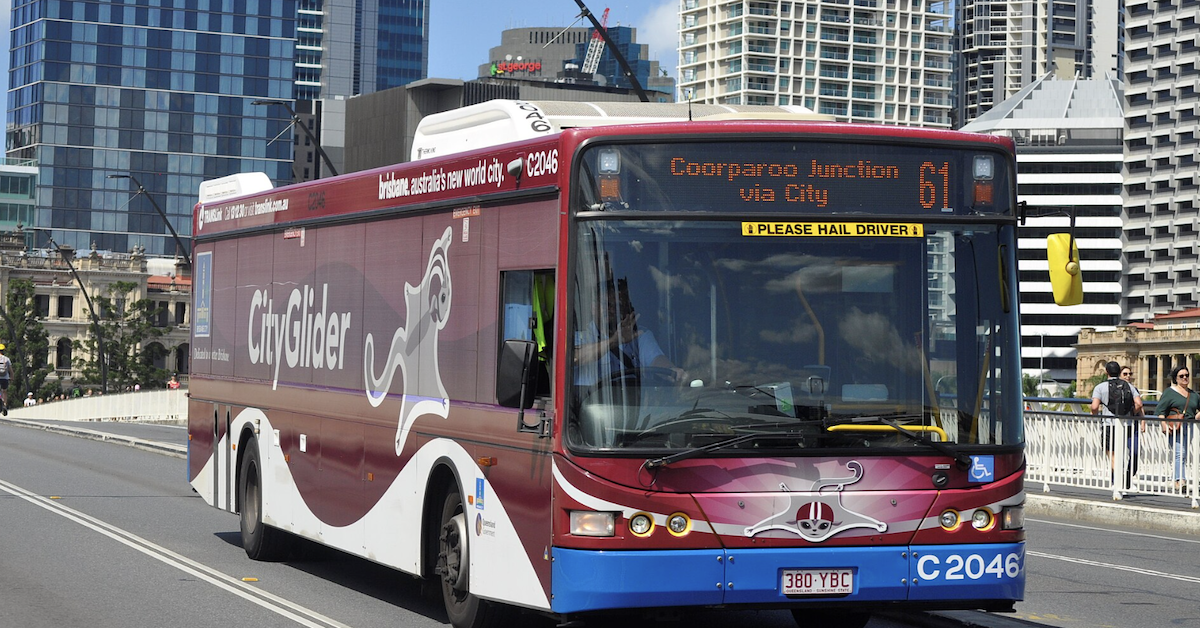
When Council announced the proposed Gold CityGlider in 2021, it outlined a new high-frequency bus service linking Woolloongabba with Northshore Hamilton through Brisbane’s inner city, impacting commuters from Stones Corner or Greenslopes.
The proposal quickly attracted attention because it would become Brisbane’s third CityGlider route, adding another frequent public transport option across several of the city’s fastest-growing suburbs.

Five years later, the Gold CityGlider has not yet entered service. Even so, the project remains part of Brisbane City Council’s transport program and continues to feature in planning alongside the Queensland Government.
While no commencement date has been announced, the proposal remains on Council’s agenda as a future addition to Brisbane’s public transport network.
Connecting Woolloongabba with the Northern Precincts
The Gold CityGlider was proposed as Brisbane’s third CityGlider service, joining the existing Blue and Maroon CityGlider routes.
Under the proposal, buses would run from Woolloongabba through the CBD, Queen’s Wharf, Fortitude Valley and Bowen Hills before terminating at Northshore Hamilton. The 2022 business case envisaged services every 10 minutes during weekday peak periods and every 15 minutes outside those times.
Although the route would not travel through Stones Corner, it could provide another public transport option for local residents by connecting with existing services at nearby Woolloongabba. The proposed route would also improve direct access between Woolloongabba and major employment, entertainment and residential precincts in Brisbane’s inner north.
A Transport Proposal Years in the Making
The corridor itself has been under consideration for many years.



A Brisbane City Council transport investigation in 2007 examined a high-frequency route between Hamilton and Woolloongabba. The Blue CityGlider began operating in 2010, followed by the Maroon CityGlider in 2013, while the Hamilton-to-Woolloongabba corridor remained a long-term proposal.
The idea returned in June 2021 when Lord Mayor Adrian Schrinner announced the Gold CityGlider and allocated $94,000 for a business case. Council submitted the completed business case to the Queensland Government’s transport authorities in 2022.
Two years later, the proposal formed part of Brisbane City Council’s Race to Gold: Brisbane’s Games Transport Legacy strategy, which identified the route as part of the city’s long-term transport planning for the 2032 Olympic and Paralympic Games.
Council also committed funding towards the project through successive budgets, subject to Queensland Government support. In 2025, the Queensland Government confirmed it would partner with Brisbane City Council to establish the proposed service.
Where the Project Stands Today
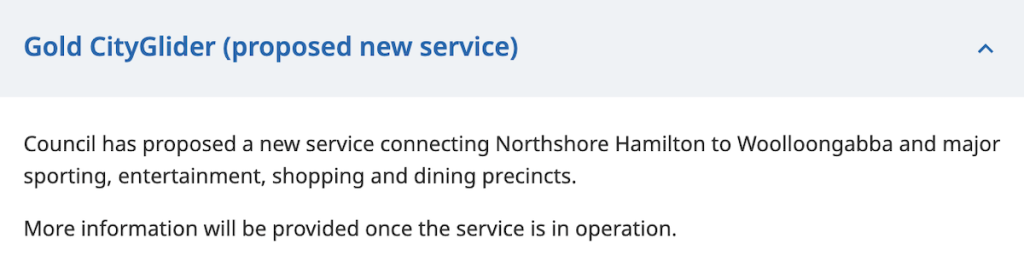
Council’s 2024 Race to Gold strategy placed service implementation from 2026 onwards. However, as of July 2026, the Gold CityGlider has not begun operating, and neither Brisbane City Council nor Translink has announced a commencement date.
In March 2026, Adrian Schrinner said the project was continuing in partnership with the Queensland Government. Separately, his office said the two levels of government were working to secure the vehicles needed for the proposed service.
The Gold CityGlider also remains identified in Brisbane City Council’s 2026–27 budget papers. Rather than appearing as a stand-alone project with its own allocation, it is listed as an initiative under Council’s broader “Provide Bus and Metro Services and Maintenance” strategy.
The budget does not specify how much funding is allocated to the Gold CityGlider or when passenger services are expected to begin.
The Gold CityGlider would offer another frequent cross-city option once it enters service. It would also strengthen links between Woolloongabba, the nearby suburbs, and Brisbane’s inner northern suburbs, which continue to see significant growth.
For now, however, local passengers will continue relying on existing bus and busway services while planning work continues.
Published 13-July-2026