



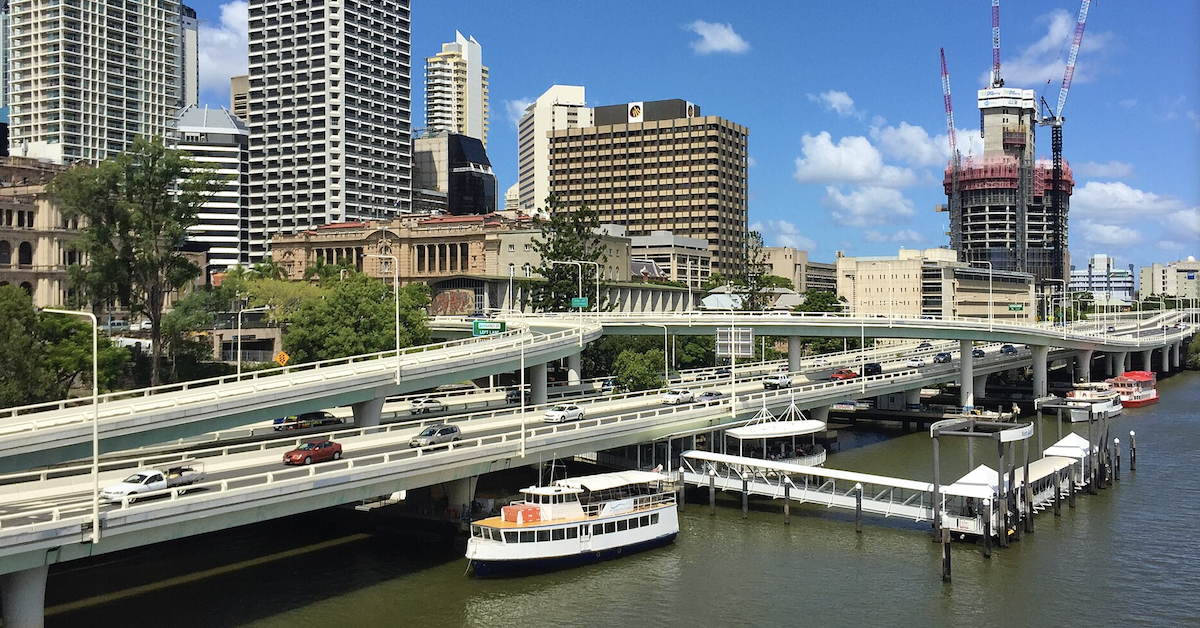
For thousands of drivers in Greenslopes, the morning commute to the Brisbane CBD is pure muscle memory. You hop onto the M3, cruise past Woolloongabba, cross the Captain Cook Bridge, and merge onto the Riverside Expressway. It is a daily ritual for the inner south. It’s a seamless, almost mindless transition from suburban streets to the heart of the city.
This month marks exactly 50 years since the Riverside Expressway officially opened on 22 July 1976. While the towering concrete lanes wrap strictly around the edge of the CBD, they are the vital final link in a corridor that changed life for suburbs like Greenslopes. It locks the Captain Cook Bridge and the South East Freeway, giving the inner south a straight shot into town, bypassing choked suburban bottlenecks and permanently reshaping how Brisbane moves.

A Radical Blueprint for a Choked City
Go back to the mid-1960s, and Brisbane was suffocating under its own traffic. The city’s narrow, colonial-era streets simply couldn’t handle the post-war motoring boom.
Desperate for a solution, transport planners looked across the Pacific. In 1965, American consultants Wilbur Smith and Associates delivered a groundbreaking transport study with a bold proposition: build a massive, elevated highway right along the edge of the Brisbane River to siphon traffic away from the city center.
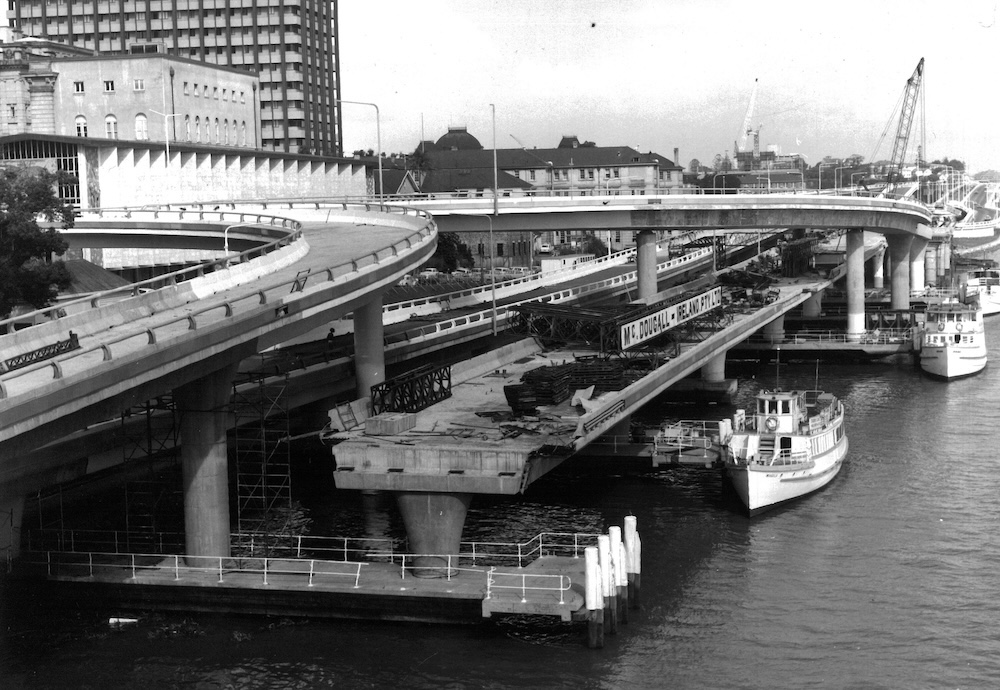
Construction crews fired up their engines in 1968. Over the next eight years, they completely transformed the riverfront, spending a whopping $37 million to finish the 2.7-kilometer stretch from Coronation Drive to Kangaroo Point. The archival photos at the State Library of Queensland show the staggering scale of the work. It was a forest of concrete pillars slowly rising out of the mud to rewrite Brisbane’s skyline.
The Lifeline to the Inner South
Though the expressway itself doesn’t touch Greenslopes soil, the suburb’s fortunes have always been tied to it.
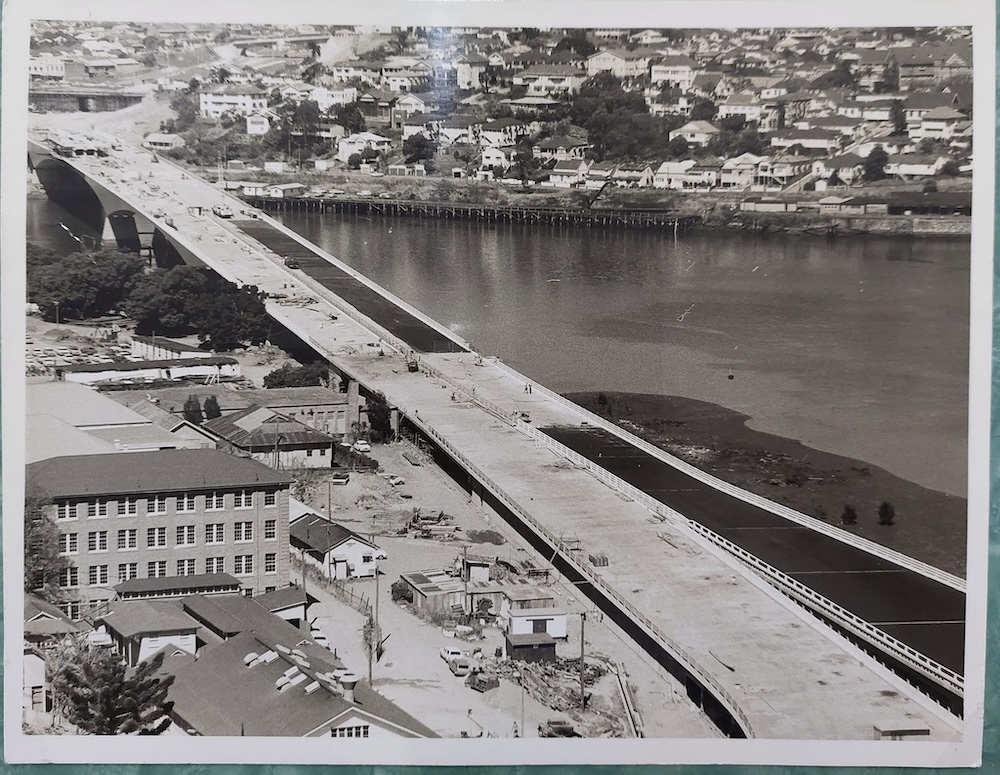
Before the expressway and the connected South East Freeway, getting from the inner south to the city meant battling local surface roads and navigating a maze of intersections. The new corridor acted like a funnel, vacuuming up traffic from Greenslopes and delivering drivers directly to the city’s doorstep.
Because of this tight connection, Greenslopes and the Riverside Expressway effectively share the same nervous system. When something goes wrong on the riverfront, the effects bounce down the highway almost instantly.



The Day the City Stood Still
People usually take the expressway for granted—until it closes.
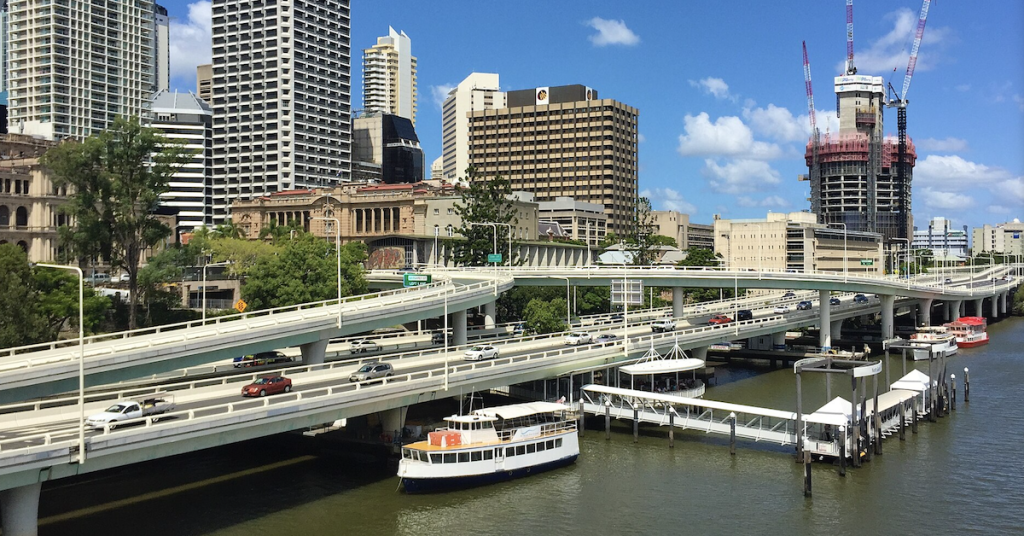
The ultimate proof of how much Brisbane relies on this stretch of concrete came in October 2006, when an emergency closure shut down the expressway. The Department of Transport and Main Roads later studied the fallout, and the results were chaotic.
The city didn’t just slow down; it seized up. With the central artery blocked, traffic backed up for miles, spilling over onto every alternative river crossing and local road. Commuters abandoned their cars, delayed their trips, or simply gave up and stayed home. For drivers down the M3 corridor in Woolloongabba and Greenslopes, the gridlock hit hard, proving that a hiccup in the CBD could paralyze the suburbs miles away.
Protests, Progress, and the Daily Grind
The Riverside Expressway has always been more than just an engineering feat. It is a living piece of Brisbane’s social history.
It wasn’t universally liked from the start. On opening day in 1976, while politicians and invited guests celebrated the ribbon-cutting, a dedicated group of conservationists gathered on the riverbank below, waving protest signs at the concrete monolith. The archives capture a city caught in a tug-of-war between preservation and rapid progress.
Half a century later, the protests have faded into history, and the expressway has simply become part of the background noise of Brisbane life. It still does exactly what it was designed to do 50 years ago.
For a Greenslopes commuter heading home after a long day, this grey ribbon of concrete above the river is just the familiar road that takes them home.
Published 14-July-2026