
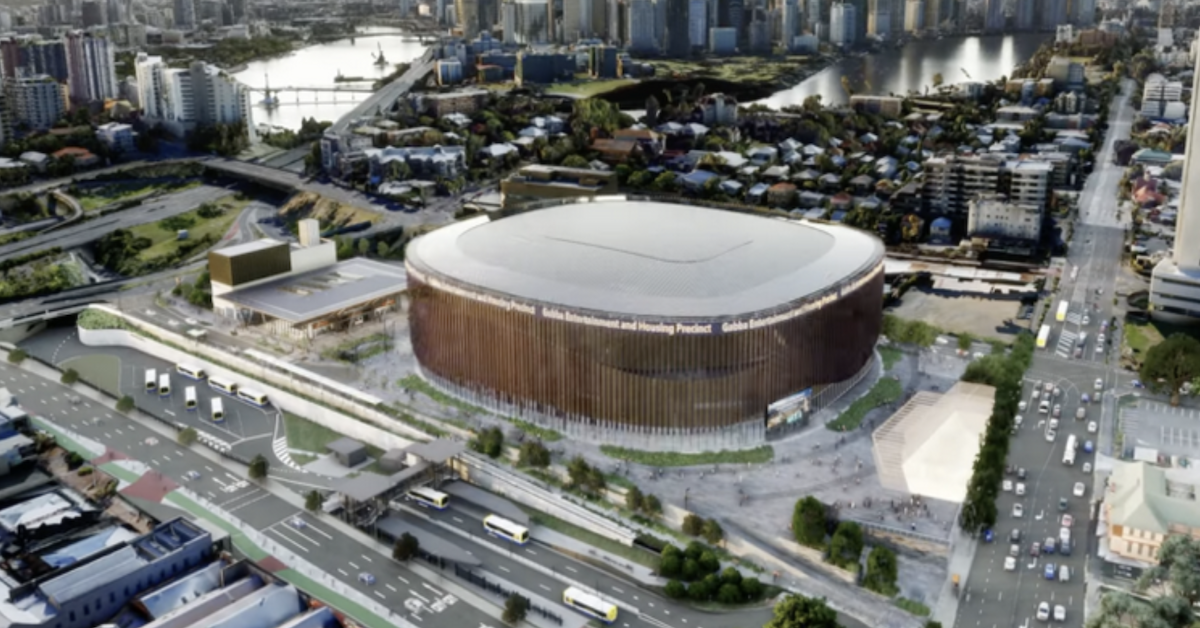
The Gabba may sit a few suburbs away from Stones Corner, but the planned transformation of the famous stadium site could soon shape everyday life across Brisbane’s inner south, with new housing, major events, changing traffic flows and a large entertainment precinct all set to arrive on the city fringe.
Queensland is moving ahead with plans to turn the Gabba precinct into a mixed-use entertainment and housing hub once the stadium reaches the end of its life after the 2032 Olympic and Paralympic Games. The redevelopment would replace the single-use stadium model with a precinct built around a new indoor arena, homes, retail, hospitality venues and public spaces.

More people, more movement across the southside
The biggest impact may not come from the arena itself, but from the flow-on effects around transport, commuting and population growth.
The Gabba redevelopment forms part of the wider Woolloongabba Priority Development Area, where planning changes are expected to support more than 16,000 homes across the broader district. As more residents move into Brisbane’s inner south, nearby suburbs are likely to feel increased pressure on roads, public transport and local infrastructure.
Stones Corner already sits along one of Brisbane’s busiest southside corridors, with many residents travelling through Logan Road, Ipswich Road and the Pacific Motorway network each day. The redevelopment is expected to increase activity throughout Woolloongabba and surrounding suburbs as the area shifts into a denser inner-city precinct.
The Gabba moves beyond sport
At the centre of the plan is a proposed 17,000-seat indoor arena designed for concerts, indoor sport and large entertainment events. The venue would eventually take over as the major event space in the precinct once Brisbane’s planned Victoria Park stadium becomes operational.
Unlike the current Gabba, which is largely tied to sporting events, the new precinct is intended to stay active throughout the week, bringing more regular foot traffic into the area through restaurants, entertainment venues and residential living.
For nearby suburbs, that could mean both opportunities and challenges. Local businesses across the southside may benefit from increased visitation, while residents may also see heavier traffic and busier streets during major events and construction stages.


Cross River Rail could reshape commuting patterns
One of the key reasons the project is moving ahead in Woolloongabba is its direct connection to the future Cross River Rail station.
The new underground Woolloongabba Station is expected to become one of Brisbane’s busiest transport hubs, linking the inner south directly with the CBD and other major rail corridors. The expanded public transport network may eventually change how many people travel into the city and surrounding suburbs.
The precinct’s location beside major busway routes and rail infrastructure is also seen as critical to supporting the long-term growth planned for the area.
A different future for a familiar Brisbane landmark
For decades, The Gabba has been part of Brisbane’s sporting identity, drawing crowds from across the southside for cricket, AFL and major events. The proposed redevelopment marks one of the biggest changes ever planned for the site.
While the stadium itself is expected to remain through the 2032 Games, the longer-term vision points to a very different future for Woolloongabba — one built around housing, entertainment and inner-city living rather than a stand-alone sporting ground.
Published 03-May-2026